Alibaba Insider Responds to Claude Ban / Tesla Caps Employee AI Spending at $200 a Week / Samsung Reportedly Wins Meta Chip Order
TL;DR
Alibaba reportedly bans Claude Code internally, Tesla caps employee AI spending at $200 per week, and Samsung is said to have won Meta's 10 trillion won AI chip foundry order.
🤖 DJI and Insta360 bring their patent fight back to China, with both sides suing over multiple core patents.
💰 Alibaba has reportedly banned Claude Code internally due to backdoor-insertion risks.
🔌 Tencent QClaw lead Zhang Shuyu has left the company and denies an internal "horse race" mechanism.
🚗 Tesla starts controlling employee AI compute costs, with a weekly cap of $200.
🚙 Li Auto adjusts its organization, moving product-definition functions back into R&D.
🧠 Alibaba integrates three AI-agent products under 1992-born DingTalk CEO Chen Yusen.
💻 Samsung reportedly wins a 10 trillion won chip order from Meta.
💡 Software engineering legend Kent Beck says programmers in the AI era need to learn how to be human.
🔍 Google Gemini Omni Flash tops the video blind-test leaderboard, overtaking Seedance-2.0.
👓 Samsung Galaxy Glasses renders surface: a Meta rival with a conventional glasses shape.
🤖 Shengshu Technology releases the Vidu S1 real-time interactive model.
🔍 Tencent Yuanbao upgrades search with visual explainers for complex questions.
🛍️ Molly Tea changes its mini-program color logo after being ordered to pay LV 10.3 million yuan.
🛒 Xiaoxiang Supermarket will charge packaging fees of up to 1 yuan per order from July 20 nationwide.
Weekend news worth reading
DJI and Insta360 bring their patent fight back to China
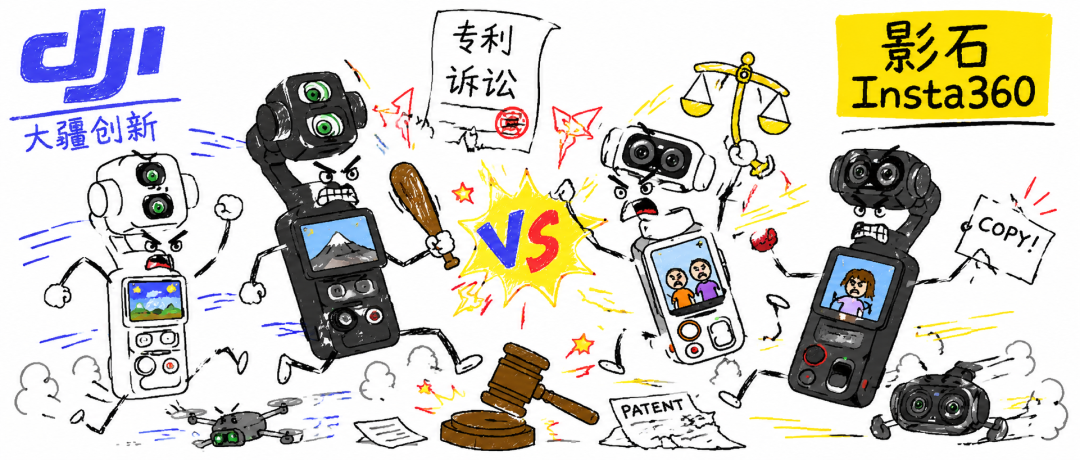
According to China Business News, DJI has filed patent-infringement lawsuits against Insta360's Luna series in multiple Chinese courts. One case accepted by the Shenzhen Intermediate People's Court in Guangdong is scheduled for hearing on August 3.
In the lawsuits, DJI accuses the Luna series of infringing multiple invention patents involving handheld gimbals and control methods, shooting methods and storage media based on handheld gimbals, detachable control devices, gimbal devices, and related control schemes.
Insta360 responded yesterday and filed six patent-infringement counterclaims against DJI in several Chinese cities.
Insta360 accuses DJI's panoramic cameras, gimbal devices and other major products of infringing multiple patents. The technologies involve panoramic shooting and editing, bullet-time shooting, camera thermal-management schemes, camera expansion schemes, and gimbal support technologies. On the same day, Insta360 also filed invalidation requests with the China National Intellectual Property Administration against DJI patents.
The domestic litigation follows both sides withdrawing their U.S. cases. On June 28 U.S. local time, DJI and Insta360 both filed dismissal requests with the U.S. District Court for the Eastern District of Texas, withdrawing their patent-infringement lawsuits and related counterclaims.
Alibaba reportedly bans Claude Code internally due to backdoor risks
On July 3, APPSO learned from an Alibaba insider that Claude Code has recently been reported to carry a risk of backdoor insertion. After a comprehensive assessment, Alibaba has placed it on its high-risk software list.
Starting July 10, Alibaba will fully prohibit internal employees from using Claude Code in office environments and recommends Qoder as an alternative.
Tencent QClaw lead Zhang Shuyu leaves, denying an internal "horse race"
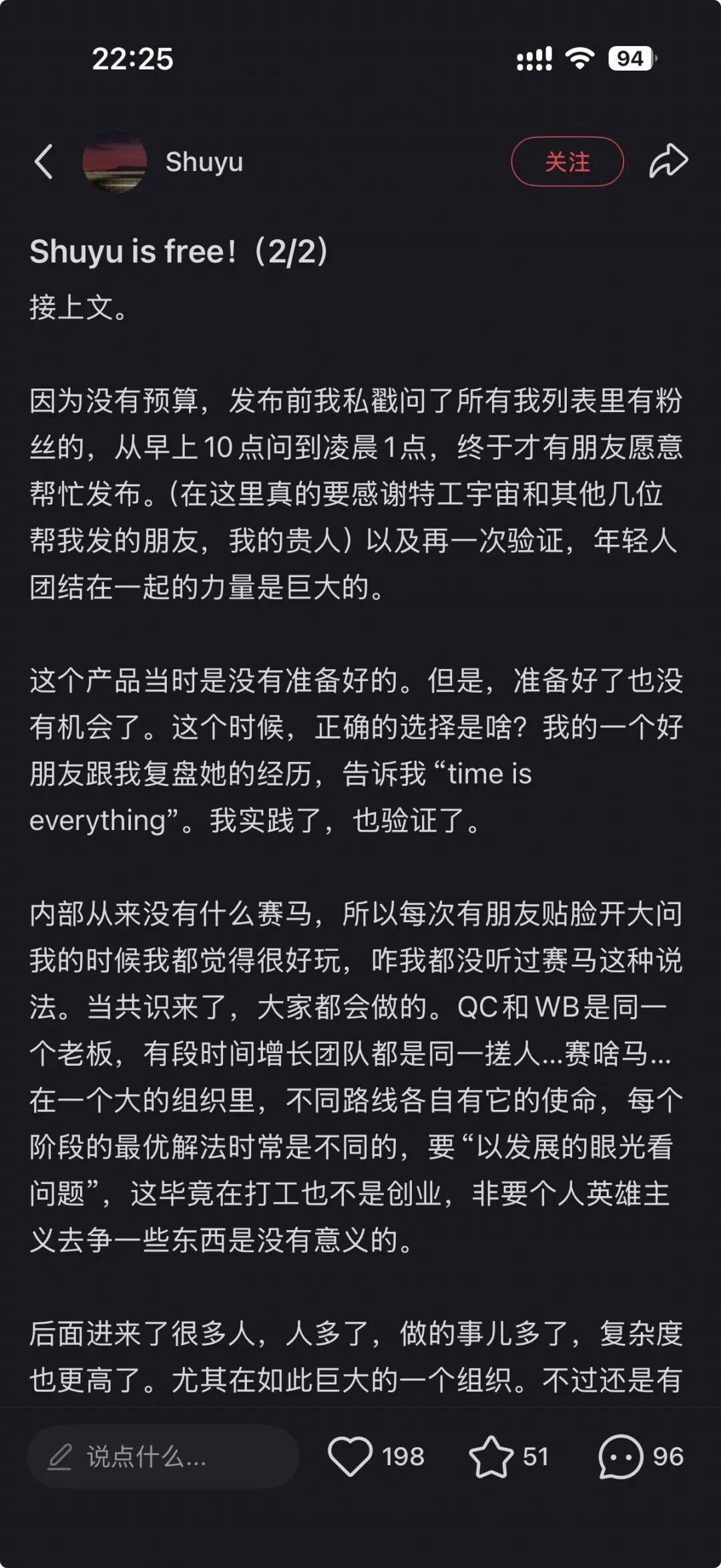
According to China Business News, Zhang Shuyu, Tencent QClaw lead and product manager, officially left Tencent on June 29.
Zhang confirmed the news yesterday in a long post on social media and reviewed the journey of building QClaw, a consumer product, from zero to one. Addressing long-running outside rumors about Tencent's internal "horse race", she clarified that "there has never been any horse race internally".
She said QClaw and another product, WorkBuddy, reported to the same leader, and their growth teams overlapped heavily during some stages. Different product routes had different missions inside the organization.
Zhang wrote that she achieved a goal of earning more than one million yuan a year at age 25 and realized her career plan of building a "phenomenal product" at age 26. Looking ahead, she said she hopes to solve one or more problems that trouble humanity.
Tesla starts controlling employee AI compute costs, capped at $200 per week

According to The Information, Tesla began placing limits on employees' AI spending yesterday. An internal memo shows that starting July 6, Tesla employees will each be capped at $200 per week in AI spending.
The report says the cap follows a surge in internal AI usage. Over the past few months, some software engineers have consumed token value worth thousands of dollars per week.
Under the new policy, employees who need to exceed the $200 weekly limit must receive approval from a supervisor. People familiar with the matter said the calculation does not include test versions of xAI products.
Li Auto moves product-definition functions back into R&D
According to National Business Daily, Li Auto recently made another organizational adjustment, planning to split off some key functions from the product department and integrate them into the R&D organization. The core idea is to let product definition return to R&D, optimizing product decision-making and shortening the cycle from definition to implementation.
People familiar with the matter said the changes mainly involve the electric-vehicle body and autonomous-driving product-definition teams.
The electric body definition team has been merged into the vehicle electric R&D department led by Liu Liguo, senior vice president of vehicle electric R&D.
The autonomous-driving terminal product team has been merged into the foundation-model R&D team led by foundation-model head Zhan Kun.
After the adjustment, Li Auto's decision-making departments will be reduced from three to two: product lines and R&D. The intermediate platform product-definition layer will be removed. By linking product definition and R&D more directly, the company hopes to ensure technical feasibility and establish two-way feedback to improve how product definitions adapt to market changes.
Alibaba integrates three AI-agent products under Chen Yusen

Alibaba confirmed yesterday that it is strategically integrating three enterprise AI-agent products. The adjustment is built around the desktop AI-agent tool QoderWork and deeply combines the capabilities of DingTalk-incubated enterprise collaboration AI platform Wukong and Alibaba Cloud's internal AI execution engine MuleRun.
The new integrated AI product will target enterprise productivity scenarios and will be led by Chen Yusen, a post-1990 executive who became Wukong business unit CEO and DingTalk CEO in mid-June.
36Kr reported that Alibaba wants to end internal competition and concentrate resources against rivals such as ByteDance's Coze and Feishu Agent, as well as Tencent WorkBuddy.
In the future, Chen may adopt a layered integration structure for the three products: QoderWork provides desktop interaction and local execution at the front end, MuleRun provides the middle-layer engine for agent self-evolution and process reuse, and Wukong serves as the backend base using DingTalk's enterprise data, collaboration relationships and organizational structure.
Alibaba has officially responded that the existing product services of QoderWork, Wukong and MuleRun will be upgraded seamlessly, and all user rights will be unaffected.
Samsung reportedly wins Meta's 10 trillion won chip order
According to Chosun Ilbo, Samsung Foundry has entered an allocation stage for some advanced processes as AI chip demand surges. This means Samsung is adjusting supply priority, guaranteeing orders for existing major customers first while screening orders from new customers.
The report says Meta has decided to hand its third-generation self-developed AI accelerator, MTIA, to Samsung for manufacturing. The contract is expected to be worth more than 10 trillion won, or about $7.3 billion. The chip is planned for mass production on Samsung's leading 2nm process, with order volume reaching hundreds of thousands of units.
Anthropic is also evaluating custom chips using Samsung's 2nm process to reduce dependence on Nvidia GPUs.
Samsung's 4nm process capacity for next year is already mostly sold out, and some 8nm capacity is also running at full load. As capacity tightens, Samsung's order strategy has shifted from "many varieties in small batches" toward a more efficient and profitable "few varieties in large batches" model, focusing on core projects from large technology companies.
Kent Beck says AI-era programmers need to learn how to be human

According to Business Insider, software engineering legend Kent Beck said yesterday on The Pragmatic Engineer that as AI becomes widespread, software engineers must learn soft skills such as communication and empathy to survive in the industry.
Beck said software engineers often lack strong emotional regulation and empathy, and can be overly direct in how they communicate. In a time when AI can automatically generate large amounts of code, he believes the traditional lone-wolf working style is coming to an end.
The software industry is already adopting vibe-coding practices, allowing senior developers to build prototypes faster and non-programmers to turn ideas into pilot projects. The trend is blurring the line between engineering and product work.
To respond to this shift, companies including Anthropic have asked engineers to serve as "mini PMs" on small projects, taking responsibility not only for code but also for stakeholder coordination and cross-functional collaboration. Beck described this career-skill shift as a cosmic joke.
When you started learning programming, people told you that mastering everything about computers would be enough. But then you discover that your ability to change the world is limited by your ability to communicate and empathize.
The rise of the product-engineer role shows that the most valuable future engineers will combine technical strength with product judgment and interpersonal skills.
Google Gemini Omni Flash tops the video blind-test leaderboard
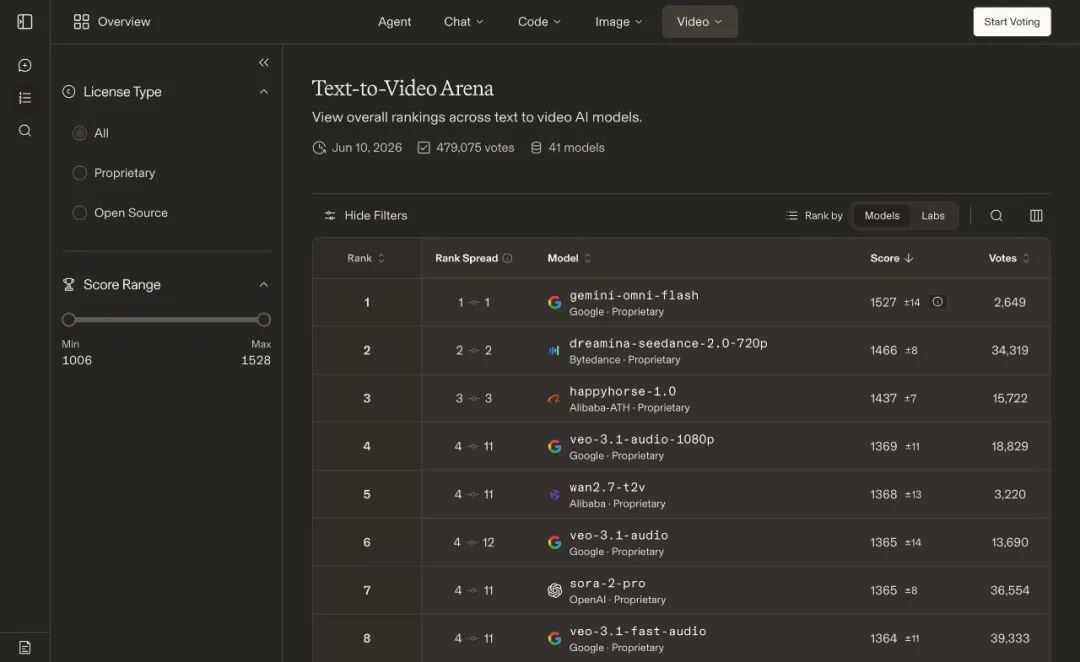
Yesterday, Video Arena ranking data showed that Google DeepMind's Gemini Omni Flash text-to-video model currently ranks first in the text-to-video arena with a score of 1527 Elo.
In the latest ranking, Gemini Omni Flash shows a clear lead, scoring 61 points above ByteDance's second-place dreamina-seedance-2.0-720p at 1466 Elo. Alibaba's happyhorse-1.0 ranks third with 1437 Elo.
The overall list shows a three-way contest among Google, ByteDance and Alibaba. In the top ten, Google holds five spots. Different specifications in its Veo 3.1 series, including the 1080p version, audio-enhanced version and fast version, perform steadily with Elo scores between 1362 and 1369.
ByteDance's Seedance models had long led the rankings, and version 2.0 remains firmly in the second tier.
Samsung Galaxy Glasses renders surface
According to SamMobile, Samsung is expected to release its first smart glasses product, Galaxy Glasses, before the end of this year. Renders and videos show a traditional design similar to ordinary black-frame glasses, highly similar to Meta's Ray-Ban smart glasses.
For interaction, the glasses have a power button on top of the right temple and volume buttons at the rear of the temple. The right temple also supports touch controls, letting users navigate with one-finger or two-finger swipes.
On the software side, Galaxy Glasses will run One UI XR based on Android XR and deeply integrate Google's Gemini AI agent.
The product supports photo capture, video recording, real-time translation, music playback and voice navigation. Hardware includes a 12MP camera, microphones and speakers, but no built-in display.
Related leaked software screenshots also show that Galaxy Glasses can be controlled together with Galaxy Ring or Galaxy Watch. To keep the glasses lightweight, most data processing will be handled by a connected phone. The glasses also have photochromic lenses that automatically adjust tint according to ambient light.
Shengshu Technology releases Vidu S1 real-time interactive model
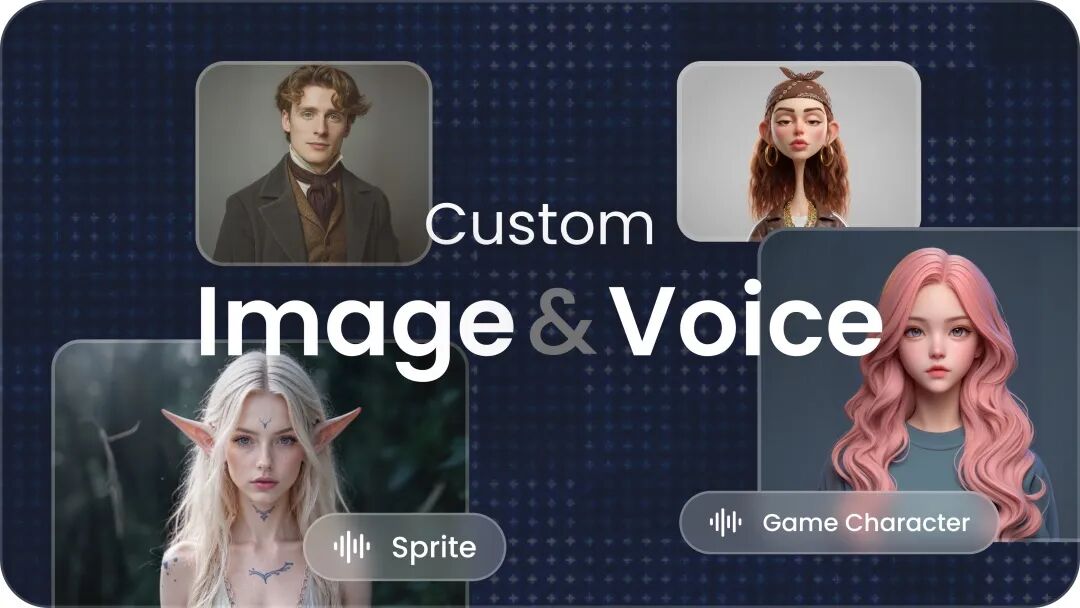
Shengshu Technology officially released its next-generation real-time interactive model Vidu S1 yesterday at the 2026 Global Digital Economy Conference. The model focuses on real-time interactive video generation, pushing AI video from offline generation toward continuous interaction.
Official information shows that Vidu S1 supports real-time video calls and voice control over video direction. Users can use voice commands to control digital humans' behavior, expressions and full-body movements in real time, enabling continuous interaction of unlimited duration.
In technical parameters, Vidu S1 supports 540p high-definition resolution at 960x540, a default frame rate of 25fps and a maximum of 42fps. The model can quickly create a custom interactive character from a single initial image of a real person, anime character or pet, without complex offline modeling and training.
Shengshu says Vidu S1's real-time interaction gives it the technical basis to enter scenarios such as AI emotional companionship, virtual idols, interactive live streaming, game NPCs and XR. Vidu S1 has opened internal testing and can be tried through the Vidu website, API platform or Vidu AI Pro mobile app.
Tencent Yuanbao search adds visual explainers

Tencent Hunyuan announced yesterday that Yuanbao's search function has received a major upgrade, adding a visual explainer capability that uses images and text to make complex search results more intuitive and improve information retrieval efficiency.
For example, when distinguishing names such as Gojo Satoru, Wutiaoren and Accusefive, Yuanbao can automatically match images of an anime character, an indie band and a pop band to help users quickly identify them.
For lipstick shade differences, Yuanbao can directly display colors such as tomato red, maple red, brick red and rose-bean red, reducing the gap between text descriptions and user imagination.
For travel recommendations, such as searching for Shanghai summer parent-child museums, Yuanbao groups results by categories such as natural science, technology interaction and history culture, pairing them with venue photos, specimen images and reservation tips to provide a structured illustrated guide.
Yuanbao also strengthens search and integration of visual materials. Users can directly search for meme collections, and Yuanbao will aggregate related series. Users can turn on fast-thinking mode in the Yuanbao chat box to try these functions.
Molly Tea changes its mini-program logo after being ordered to pay LV 10.3 million yuan

According to China Business News, the Suzhou Intermediate People's Court recently issued a first-instance judgment in Louis Vuitton Malletier's trademark infringement lawsuit against Molly Tea. The court found that Shenzhen Molly Tea Catering Management Co., Ltd. and a beverage store in Wuzhong Economic Development Zone infringed LV's exclusive rights to seven registered four-leaf flower graphic trademarks.
The judgment requires Molly Tea's main company to compensate LV 10 million yuan in economic losses and 300,000 yuan in reasonable rights-protection expenses within 10 days after the judgment takes effect, totaling 10.3 million yuan.
Jiemian News reported that Molly Tea said it will appeal according to law and has posted job openings on recruitment sites for legal managers focused on intellectual property, with monthly salaries up to 40,000 yuan.
Molly Tea's mini program has changed its original black logo to a colored logo. When a reporter asked customer service whether the logo change was related to the LV lawsuit, staff said the company will appeal according to law and will continue focusing on quality and service.
Despite the lawsuit, Molly Tea saw order surges in multiple cities yesterday due to a co-branding campaign. Some stores in Shanghai and Shenzhen had queues of more than one hour. Data shows its official Douyin account gained more than 110,000 followers over the past two days.
Xiaoxiang Supermarket will charge packaging fees
According to Sina Finance, Meituan's Xiaoxiang Supermarket will officially begin charging packaging fees. The policy is scheduled to pilot in Shenzhen on July 6 and roll out nationwide on July 20.
The packaging fee will be charged per order and only once per order. Regular product orders will be charged 0.5 yuan per order. If an order includes products requiring cold-chain storage, the system will automatically upgrade to cold-chain packaging, bringing the total to 1 yuan per order. Large packaged items such as milk, rice, flour and cooking oil will not be charged packaging fees.
Some users have already received related notices in the Xiaoxiang Supermarket app. Customer service said that after packaging fees are introduced, packaging-bag material quality will be upgraded, and the fees will only cover material and production costs.
Weekend time
One Fun Thing: Jensen Huang's Tom Ford leather jacket goes to auction
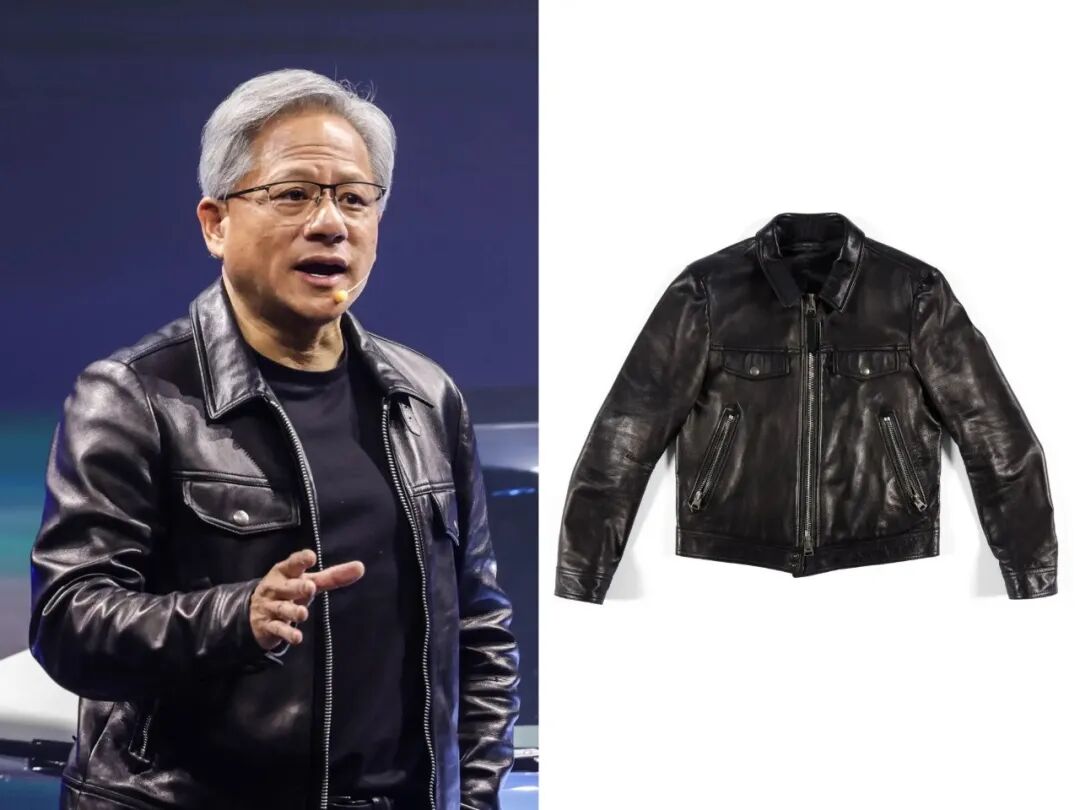
According to Business Insider, Sotheby's will begin auctioning a signature black leather jacket worn by Nvidia CEO Jensen Huang on July 7. The jacket was designed by Tom Ford and bears Huang's handwritten signature.
The jacket has appeared in many of Huang's public events. Sotheby's estimates it will sell for $40,000 to $60,000, or about 290,000 to 435,000 yuan. Interestingly, that estimate is roughly comparable to the price of one of Nvidia's highly sought-after Blackwell AI chips.
The highly recognizable "tech armor" will be exhibited at Sotheby's New York through July 16, and the auction will close on July 17. For superfans who cannot buy a Blackwell chip, this may be another way to own hardware matching the AI chip giant's CEO.
Weekend watch: 72 Hours in Normandy

The war film 72 Hours in Normandy centers on Colonel James Stagg, chief meteorologist of the Supreme Headquarters Allied Expeditionary Force.
The film records in detail how he used limited meteorological observation methods during the 72 hours before the June 1944 landing, confronted uncertainty under extreme psychological pressure, and ultimately persuaded Supreme Allied Commander Dwight Eisenhower, played by Brendan Fraser, to delay the planned attack.
Unlike traditional war films built around large-scale explosions, the film focuses on the meteorological game before the Normandy landings, a decision that shaped human history.
Douban data shows that nearly 50,000 viewers have rated the film 8.2, with more than 80% giving four stars or above.
Book guide: Understanding Communication explains media logic in the algorithm era
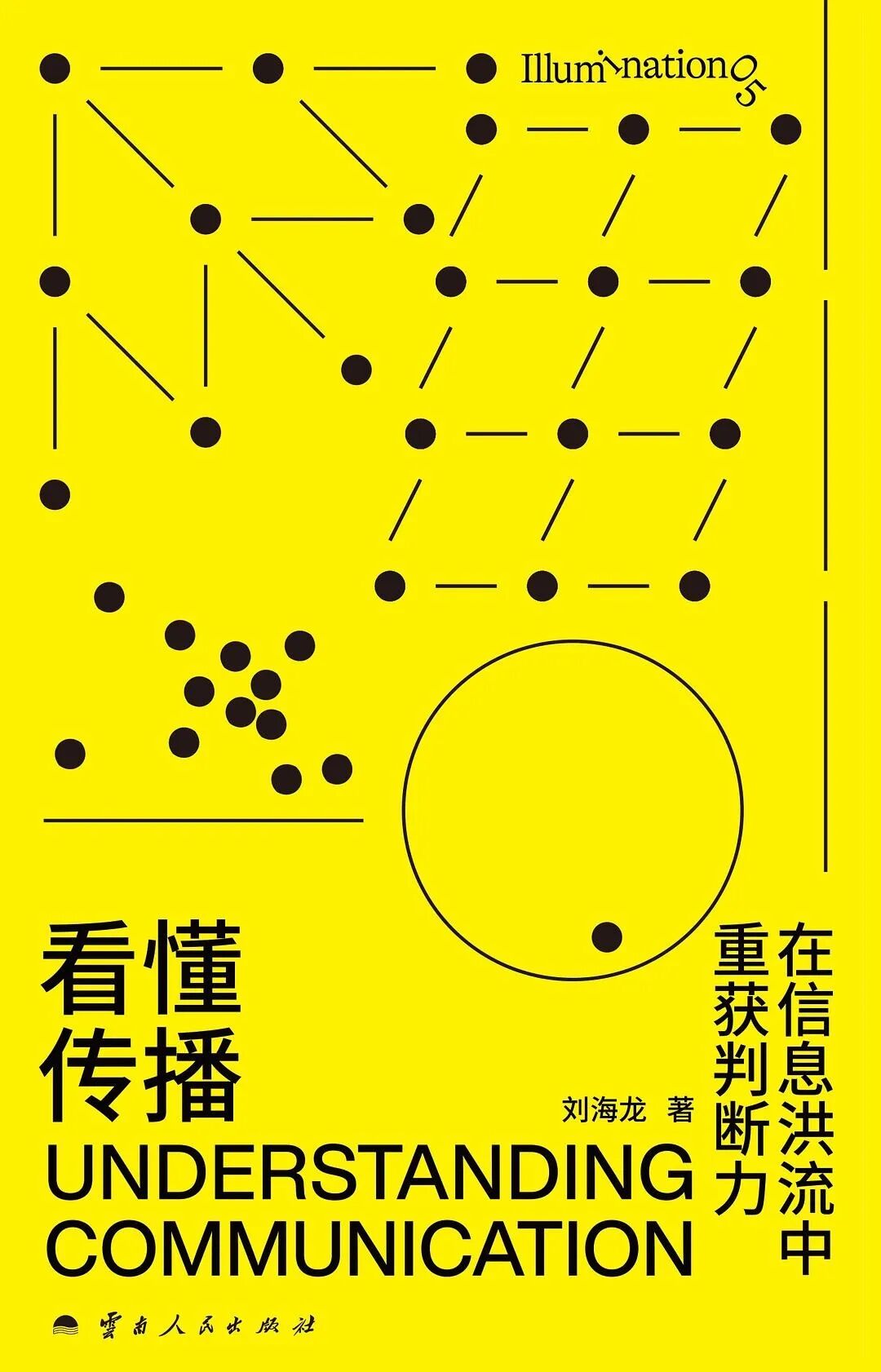
Understanding Communication explains the underlying logic of media society for general readers. Through 41 lessons, it builds a systematic framework for media thinking around five dimensions: the nature of media, technological power, group behavior, operating mechanisms and content production.
In the book, Liu Hailong analyzes algorithmic recommendation, filter bubbles, the digital divide and agenda setting, explaining how trending lists allocate public attention and how social media causes context collapse.
The book argues that in the post-truth era, media is not only a carrier of information but also a measure that reorganizes the world's order. Through classic theories such as framing theory, spiral of silence and third-person effect, the author guides readers to recognize traffic rules and algorithmic traps so they can keep rational judgment in a manipulated information environment.
Game pick: Rhythm Heaven Groove

Rhythm Heaven Groove, developed by Nintendo's planning and production division with multiple partners, officially launched on Nintendo Switch on July 2, 2026.
The title marks the series' return after 11 years, with Tsunku as producer, and supports Chinese interface and voice acting for the first time. It returns to a flat visual style, includes 100 HD remastered stages and 50 new stages, keeps the series' minimalist one-button rhythm feedback, and optimizes input precision and TV-mode synchronization for Switch 2 hardware.
The new game introduces a rhythm RPG mode called Beatspell, where players cast spells through specific beat commands, while also adding cooperative and competitive modes for up to four players.
IGN gave the game a 9, or Amazing, saying its music is highly addictive, the single-player campaign is well balanced, and remix stages perfectly combine muscle memory with audiovisual feedback. Although the RPG mode is said to become slightly repetitive later, the game is seen as an unmissable peak sequel thanks to high production quality and social fun.

Editorial team
Product Team @ WebCal
The official product team behind WebCal. We build high-performance computing infrastructure and decentralized cloud solutions.